Closet Philosophies
The Girls Explain The Ideology Behind How They Dress
Leticia Cunha
What role does nostalgia play in the way you dress?
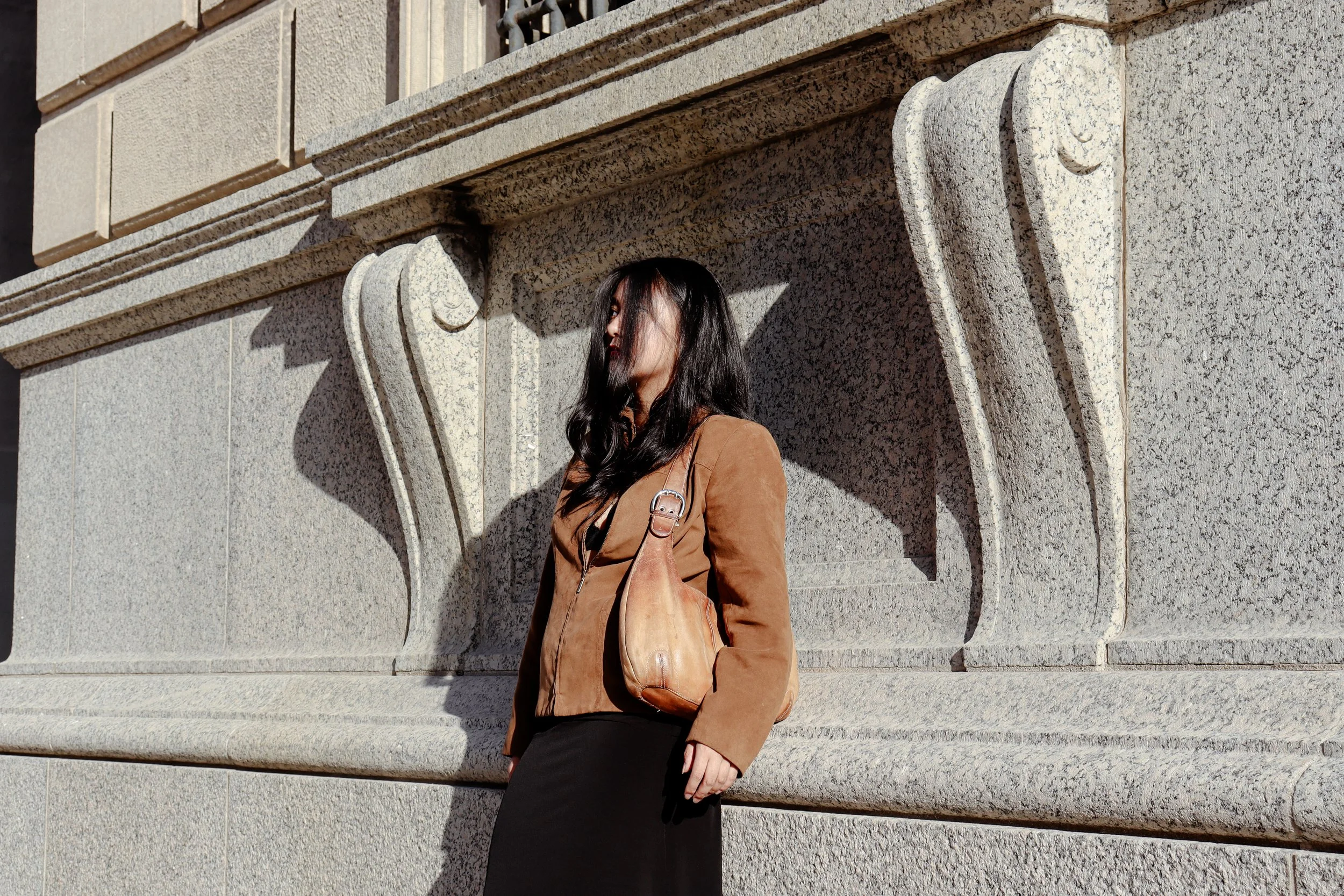
I find that the older I get, the more I connect nostalgia with fashion. I’ve started to incorporate pieces that I remember seeing my parents or grandparents wear when I was a child, which has made me feel a deeper connection with my everyday outfits. Growing up, my grandma was an absolute fashion icon (and still is today), and although I didn’t understand much of it when I was a child, I see myself gravitating toward a lot of the same pieces she used to wear. For example, I’ve been loving styling vintage square scarves around my neck or playing with pointy shoes, just like she did when I was growing up. She also plays a huge role in my love for vintage shopping. [My grandma] always loved coming with me and pointing out pieces she used to wear in the '70s, '80s, and '90s.
“Because of this, I don’t have a particular era that I deeply connect with, but rather I find myself styling pieces from multiple time periods and incorporating them with more modern styles.”
I’ve collected many vintage accessories like hats, scarves, and jewellery and they’re my favourite to style with more modern silhouettes, like oversized clothing. I also love certain aspects from each of those eras, for instance, more boho styles from the ‘70s, denim on denim from the ‘80s, and a little grungy vibe from the ‘90s.
I do believe nostalgia plays a big role in both memory and personal style. I love finding ways to style my grandmother’s old pieces with more modern looks, which not only brings back memories but also makes me feel incredibly fashionable at the same time. There’s something so cool about saying “Oh, this is my grandma’s old piece…” when someone compliments my outfit!
What does your closet say about your relationship with consumption?
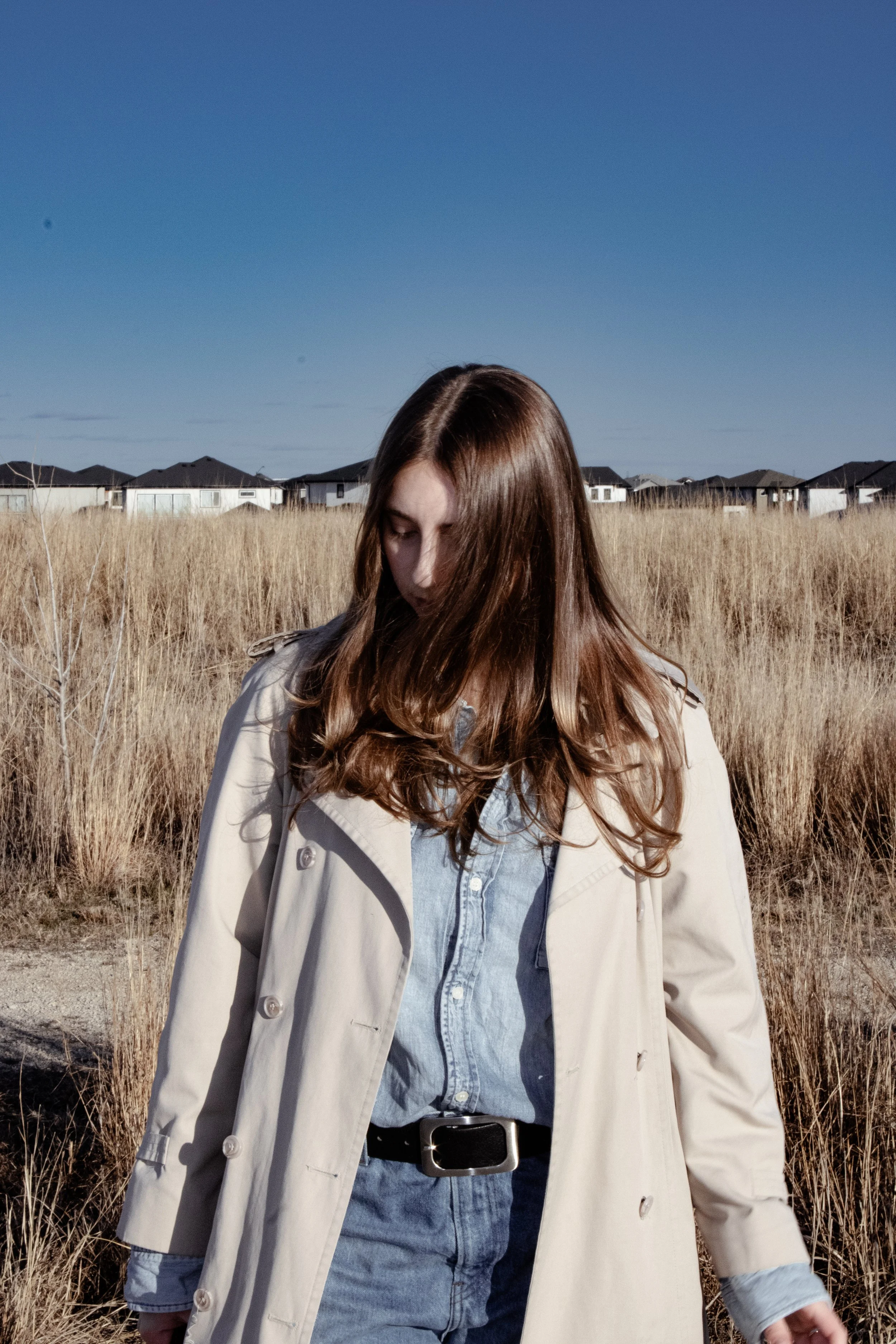
Over the years I have noticed a shift in my consumption habits. The more I learn about the fashion industry, the more I begin to think about how my purchases have weight to them. At the same time, working at a local clothing store that is consciously curated has enabled me to participate in more sustainable purchasing practices. For example, I now buy pieces more rarely, but at a higher price point, knowing that I will have them forever, opposed to buying trendy pieces seasonally. When I buy those pieces, I try to find them second-hand or from a small business. Doing so makes me feel better about my purchasing habits because, even if a piece doesn't last me a lifetime, I know I've supported small businesses and independent artists, which is a huge part of my philosophy.
Apart from trying to carefully curate my closet, I also practice restraint as part of my philosophy. Recently, I took a Sustainable Business class where I promised to not buy anything new for four months. Doing so made me appreciate the clothes I already own and inspired me to style the clothing I already have in different ways, which I think elevated my sense of style even more than buying something new would. I also realized that using platforms like Pinterest and Instagram for style inspiration was heavily influencing my occasional impulsive purchases, so I decided to start looking for style inspiration that incorporates pieces I already own, saving pins that I can easily recreate without buying something new. In turn I have been able to use the money I have saved from not impulsively buying things to invest in cool vintage accessories that will amplify my outfits even more.
Dina Hamid
Do you think getting dressed is more about self-expression or social navigation?
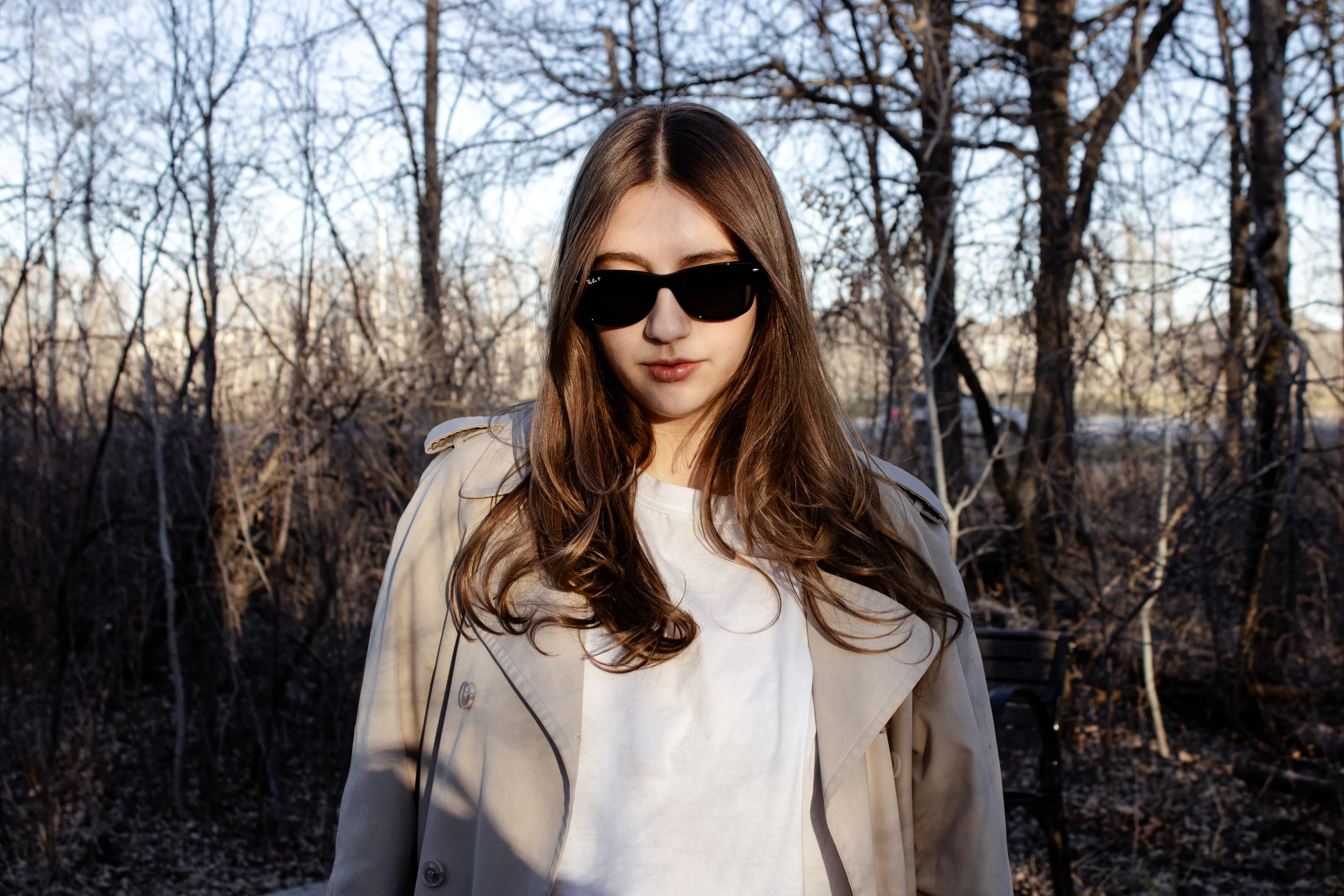
I think it can be a bit of both, depending on the context. The way I dress for a night out, an errand, a hike, a vacation, or the workplace differs based on the environment. That doesn’t mean I don’t dress for myself, because I always wear clothes that I feel reflect who I am. It just means that I’m mindful of how the clothes I wear in certain settings may affect my experience in those spaces.
In terms of social navigation, style looks to me like taking unspoken fashion norms and making them bend and adapt to you. There is a lot of room for self-expression there. For example, I know there is a certain “professional” look expected of women in the workplace in order to be taken seriously, but who says “professional” can’t include colour, texture, and fun patterns? You get to define what that means to you, and that’s where the self-expression within social navigation comes from.
I don’t think I’ve ever changed the way I dress to fit into a group. Style and fashion have always felt like part of someone’s identity to me, so the idea of changing that for group approval never made much sense. Also, as much as I love fashion, why should someone’s style be such an important marker of their character that it becomes a reason they aren’t liked or accepted? I don’t believe it’s ever that deep.
Because of that, I always dress for myself since there’s no single good reason not to.
When you change the way you dress, do you feel like you’re discovering yourself or performing someone new?
Where do you draw the line between experimentation and disguise?
From my perspective, I don’t think my style has “changed,” because that implies there was a deliberate intention behind it. Instead, my style has naturally evolved alongside my personal growth. Whenever my style changes outwardly, it feels more like I’m discovering new parts of myself, because I think style, at its core, is a physical representation of the self.
The older I get, the more I grow, the more I learn, and the more confident and comfortable I become, the more my style matures alongside me. I used to love skinny jeans, but then I discovered straight-leg and barrel jeans and realized I loved them even more.
My style reflects that evolution of self. With every version of me, I still recognize that girl, and there are elements of her style that I still carry with me today.
I try to stay grounded in authenticity by sticking to what I genuinely love and what makes me feel comfortable. I know something is off if I feel uncomfortable in an outfit for any reason, so I simply don’t wear it. If an outfit excites me, makes me feel good, or feels comfortable, then I wear it. If not, I go back to my closet and try again.
What part of yourself does your style hide rather than express?
I would say my body.
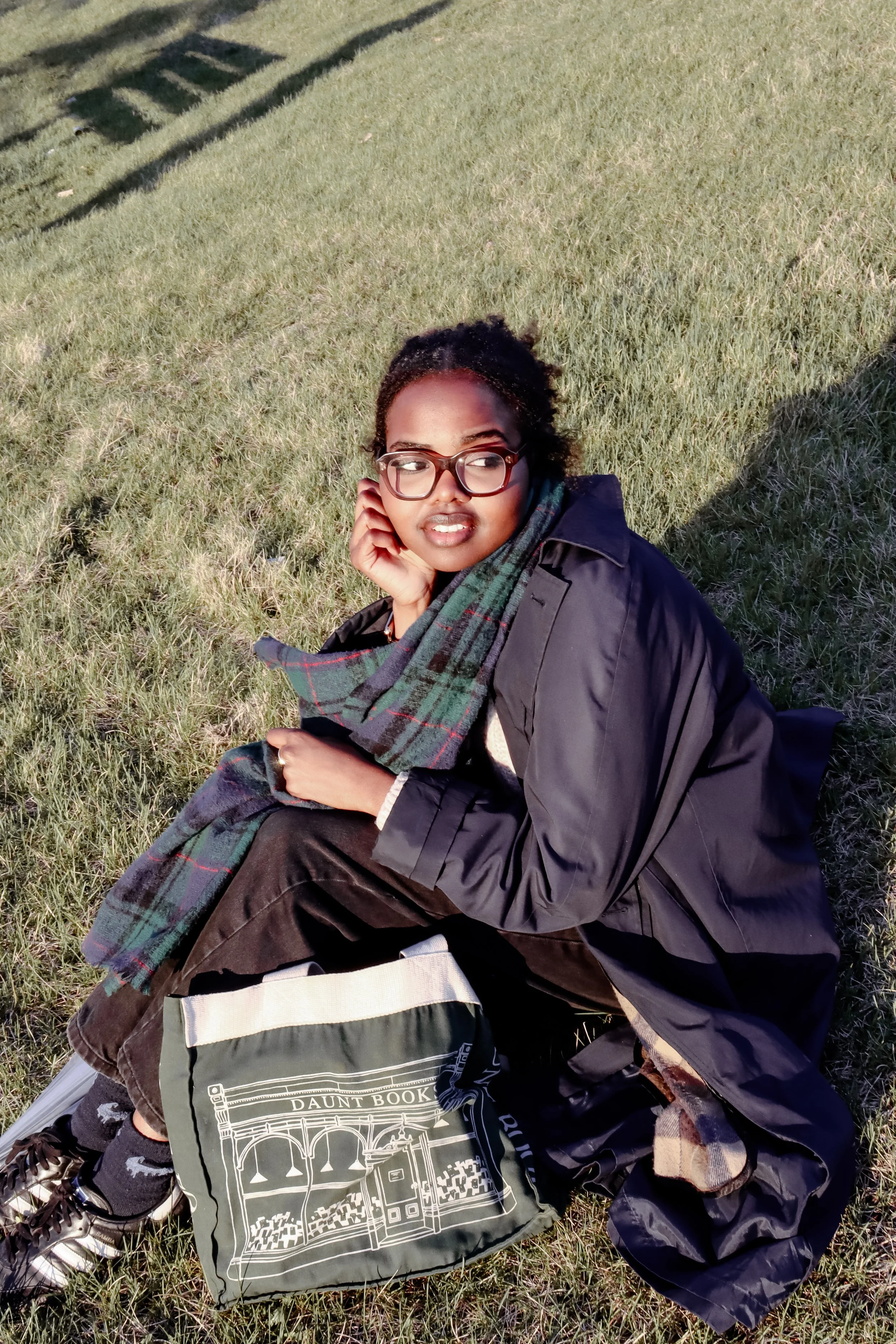
Having been a hijabi throughout most of my adolescence and into early adulthood, I’ve always been very mindful of my body and how it interacts with clothing to present me to the world. Modesty is still a concept I grapple with, especially what it means and looks like to me now.
I think I’ve become more open to exploring different styles post-hijab, but there are still things I choose to conceal because they remain uncomfortable for me. I still don’t like showing my chest or legs.
“At the same time, I think people understand me better because of my style. If I dressed differently or without my personal aesthetic, I think there would be a disconnect between who I am and how people perceive me.”
I like fun. I like being playful. I like whimsy, laughter, and joy. I express that through colour, texture, patterns, and jewelry. Sometimes that means my outfits are bold and extra because I’m walking around in a chartreuse puffer jacket and a bright blue scarf, and sometimes it’s much more understated. Either way, I think my style communicates something about me, even if it’s simply that I really love gold jewelry (which I do).
Lara Boutros
Do you think clothing can shape identity, or does it only reveal it?
This varies person by person and how open they are to have their identity shaped. Some people simply view clothing as a way to avoid a public indecency charge. And honestly, I see no issue in that at all.
I grew up obsessed with pink. I had a pink room, pink clothes, a pink backpack, a pink lunchbox, just a very pink existence. Looking back, I don't know whether I liked pink because it reflected who I was, or whether I became who I was because I was constantly surrounded by it. At some point, the distinction became impossible to make. I think clothing works similarly. It can reveal who you are, but it can also shape you in subtle ways. Not because a dress or a blazer has some magical transformative powers, but because humans are deeply influenced by the stories we tell ourselves. If you spend every day dressing like the person you want to be, eventually the gap between who you are and who you want to become starts to shrink.
I think of all the business clothes I bought when I first started university. At the time, I was trying to look like someone who belonged. Looking the part gave me enough confidence to slowly become the part. However, the clothes didn't earn the degree for me, sit through the lectures, or survive the exams, but they helped me visualize a future version of myself that felt worth growing into.
At the same time, clothing can only shape you so much. Eventually, the costume either becomes a second skin or it starts to itch. So I suppose my answer is that clothing does both. But you will only realize it when one random Tuesday in your work bathroom you will catch yourself in the mirror and not think twice.
What memory is physically stored in your clothing?
In the back of my closet is this quite unfortunate, dog pee coloured, mildew infested shower curtain yellow dress. It was something my mom had in the back of her closet, back in our old house in Egypt. That house has now long since been sold, another family moving through the rooms we once filled, our presence once potent, now stale air that’s been aired out.
My sentimentality seems stifling to most, but a familiar warm embrace to me. My absolutely fashionable mother probably pulled that dress off, but on my it truly does me no favours. It looks like someone made an enlarged pillow case and made t tight in the wrong spots and loose in even more unflattering places. But I can’t seem to find it in me to throw it out. That dress holds a version of my mom that I did not get to know. A version of her that feels familiar in a way that only a mirror could replicate. As I inch closer to the age she must have been when she wore it, it starts to feel less like hers alone.
Simply put, the dress remembers the youth of my mother and it holds a future version of myself. I can’t find it in me to get rid of it, even if it lives in the back of my closet.
Do you think clothing absorbs emotional meaning over time?
Of course! Clothes alone are just pieces of thread that got spun together in some random factory. Butthat dress you bought at H&M becomes the dress that you graduated in. The T-shirt you bought at Zarabecomes the one you found out you were going to be an aunt in. Even stains become the smile lines ofclothes. A visual marker of a life well lived. Freshly purchased clothes are just that. Fresh. It’s your lifethat weaves in the emotional meaning.
Do you think your style reflects who you are, or who you want to become? Has your style ever "grown into you" over time?
I think my answer to that question would depend on when you asked me. If you had asked me when I first started university for example, I would have said it is who you want to become. I had just started buying dress pants and suits en masse, hoping that it would give me the appearance of the quintessential business student. Yesterday I gave most of the clothes I bought during that period away. It didn’t feel like me anymore. Or in other words, it didn’t reflect who I am now. Ironically, I am typing this the night before my graduation. In the literal sense of the word, I am not the quintessential business student anymore, I am not a student anymore period. Does that mean I will start dressing as business professional now? Maybe, but I think my answer to this question now would be that my current style reflects who I am internally.
Margaret Bahalla
Do you think your style reflects where you come from?
Growing up, I was definitely influenced by the way my friends and family dressed. A large part of my fashion identity was centered around ‘fitting in’. I always felt like there was some sort of expectation on how I should dress. I made sure I never strayed far from this imaginary ‘style’ boundary I made up for myself. As I grew up, I started to question why I was dressing to ‘fit in’ to a group and community of people I had very little in common with. Over time, I started to realize that no one actually cared! No one was even paying enough attention to even think twice about what I was wearing.
Even if they did, I realized that it was okay for people to not like or understand the way I dress. Although there are still those influences that exist in the way I dress today, I have adapted it in a way to fit my own preferences. Wearing what I want without worrying what people liked helped me connect and appreciate my sense of style.
What does "feeling like yourself" in an outfit actually mean to you?
Feeling like myself in an outfit has to reflect both my personality and creativity when it comes to my fashion sense. I don’t think there is any strict formula that I follow in order to achieve this. I like to test limits on what other people may consider ‘ugly’ in order for me to decide whether I actually like it. Sometimes I even see it as some sort of challenge as to whether or not I can pull something off! Any outfit that has intention and creativity behind wearing it makes me feel most like myself.
I feel most disconnected from my style the minute I start to dress for someone else other than myself. Surprisingly, I fall victim to this more often than not. I could lie and say I only wear things that I like, but between work, different friend groups, school, and family, I tend to shift how I dress all the time. I dress the most like myself when I do things alone. Whether it is running errands, getting coffee, and studying, I tend to put together outfits that feel true to myself.
It took me a while to understand my personality and how that was reflected in my style. I’ve only really started understanding my style within the past year. In my late teens and early twenties, I was always trying to find what category I fell into when it came to my fashion sense. Every month, I constrained myself strictly to a particular fashion category. After a while, I kind of questioned why I even did that in the first place. When I realized that it was okay to just dress how I wanted to, I finally found myself in how I dress.