
Luxury Without Ownership
When the most fashionable thing you can own is temporary.
Luxury has traditionally relied on the promise of permanence. The investment bag, the inherited coat, the watch kept in its original box: these objects were designed not only to be worn, but to endure. They functioned as proof of taste, discipline, and arrival. To own luxury was to stabilize aspiration into evidence.
That logic is beginning to feel less absolute.
For a generation fluent in images, references, and rapidly shifting identities, the value of fashion increasingly lies not in possession, but in access. The fantasy is no longer limited to acquiring the object and keeping it forever. It is also found in proximity: to a garment, a room, an archive, a runway, a cultural moment. The new luxury does not always ask, “What do you own?” It asks, “What were you close enough to experience?”
This is the central tension of contemporary fashion: luxury is still obsessed with exclusivity, but exclusivity is no longer expressed only through ownership. It now moves through invitation, circulation, borrowing, attendance, visibility, and cultural fluency. The fashionable object has become less of a final destination and more of a temporary point of entry.
Clothing rental culture makes this shift visible. Once treated as a practical solution for weddings or formal events, rental fashion has become part of a broader redefinition of consumption. It offers the pleasure of transformation without the permanence of acquisition. A designer dress can belong to someone for one night; a bag can serve one carefully constructed look; a runway-adjacent piece can live in photographs, memory, and social perception without ever becoming a closet staple.
This does not signal the death of desire. It signals a more flexible relationship to it. Our generation has not abandoned fashion objects. If anything, the obsession with fashion has become more archival, more referential, and more exacting. But the desire is less straightforward than “I want to own this.”
That distinction is crucial. Ownership suggests completion. Access suggests movement.
The contemporary wardrobe is no longer expected to represent one stable self. It is asked to accommodate contradiction: minimal one week, theatrical the next; corporate, romantic, severe, ironic, nostalgic, anonymous, hyper-visible. Personal style now operates less like a fixed signature and more like a rotating vocabulary. To permanently buy every version of the self would be financially absurd and aesthetically limiting. Renting, borrowing, and circulating clothes allow identity to remain provisional without losing intention.
In this sense, temporary fashion is not necessarily superficial. It reflects a more accurate understanding of how taste works now. Taste is no longer built only through accumulation. It is built through selection, interpretation, and timing. The most compelling dresser may not be the person with the largest wardrobe, but the person who understands how to enter a reference at the right moment and leave before it curdles into costume.
Archive borrowing and collector culture deepen this shift. The archive piece carries a different charge from the newly purchased luxury item. Its value comes not only from rarity or price, but from context. It gestures toward a season, a designer era, a silhouette, a scandal, a mood. It rewards those who know why the piece matters.
But access should not be mistaken for democracy. The move away from ownership does not eliminate hierarchy; it simply reorganizes it. The question is no longer only who can afford the garment, but who can reach it. Who knows the collector? Who has the platform? Who has the body deemed appropriate for the sample? Who is considered careful enough, visible enough, tasteful enough, or socially useful enough to borrow the piece?
Luxury without ownership still has gatekeepers. They have just become harder to name. This is where the language of access becomes both seductive and suspect. On the surface, it appears to loosen fashion’s old barriers. More people can participate without buying. More people can touch the fantasy without paying full price. Yet access can also produce its own quiet exclusions, based on networks, social capital, and cultural proximity. The archive may not be behind glass anymore, but it is rarely left unattended.
Still, the shift reveals something important about the current fashion imagination. Increasingly, fashion’s centre of gravity is moving away from the closet and toward the event. The meaningful fashion object is not always the thing privately owned, but the thing publicly activated: the rented dress, the vintage pull, the showroom appointment, the shared livestream, the watch party, the borrowed garment, the photographed arrival.
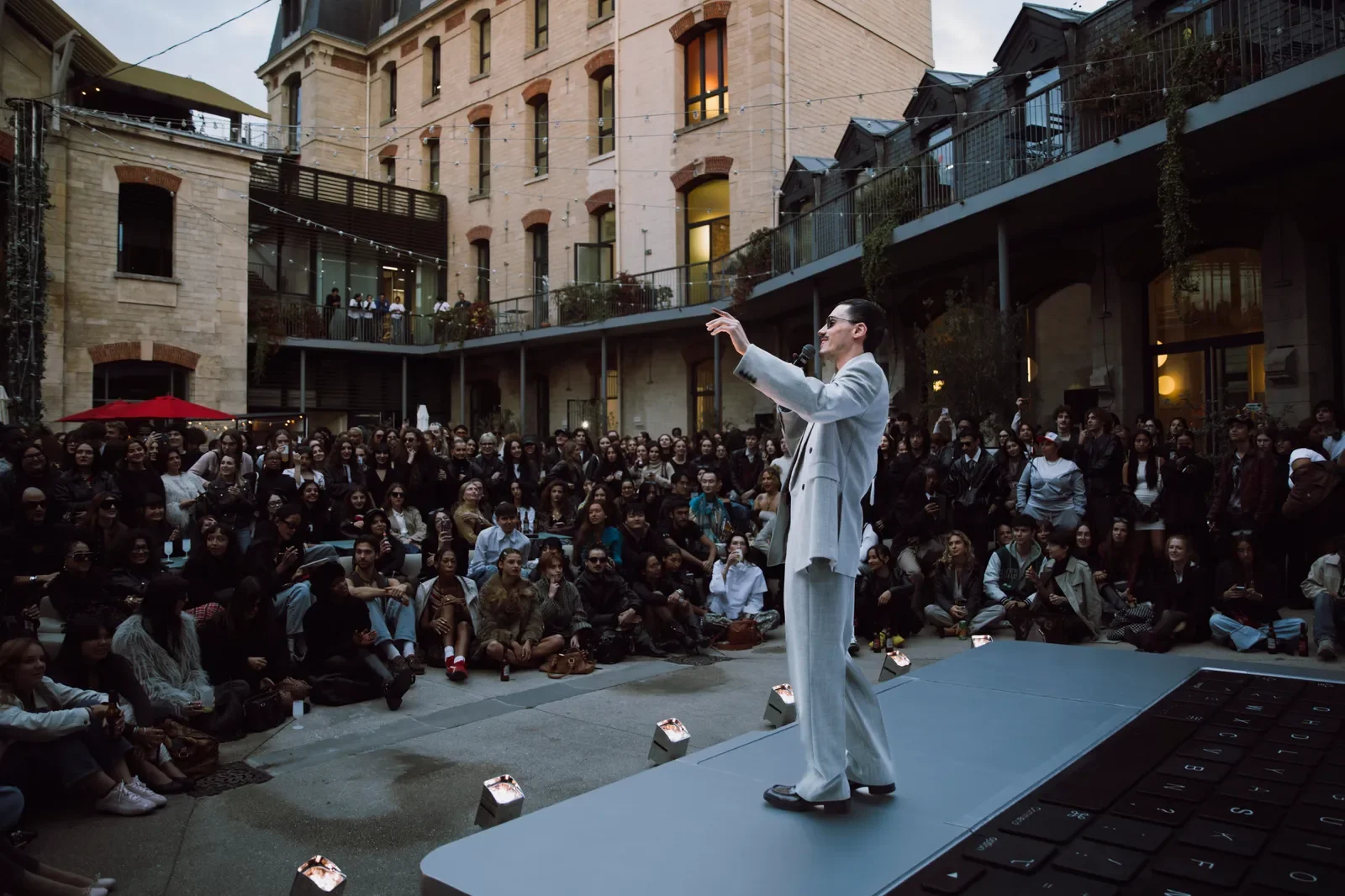
La Watch Party captures this beautifully. Built around collective viewings of major runway shows, it reframes the fashion show as a participatory cultural event rather than a closed industry ritual. Instead of waiting for an invitation to the official room, fashion fans create their own room. They dress, gather, watch, react, critique, document, and transform spectatorship into belonging.
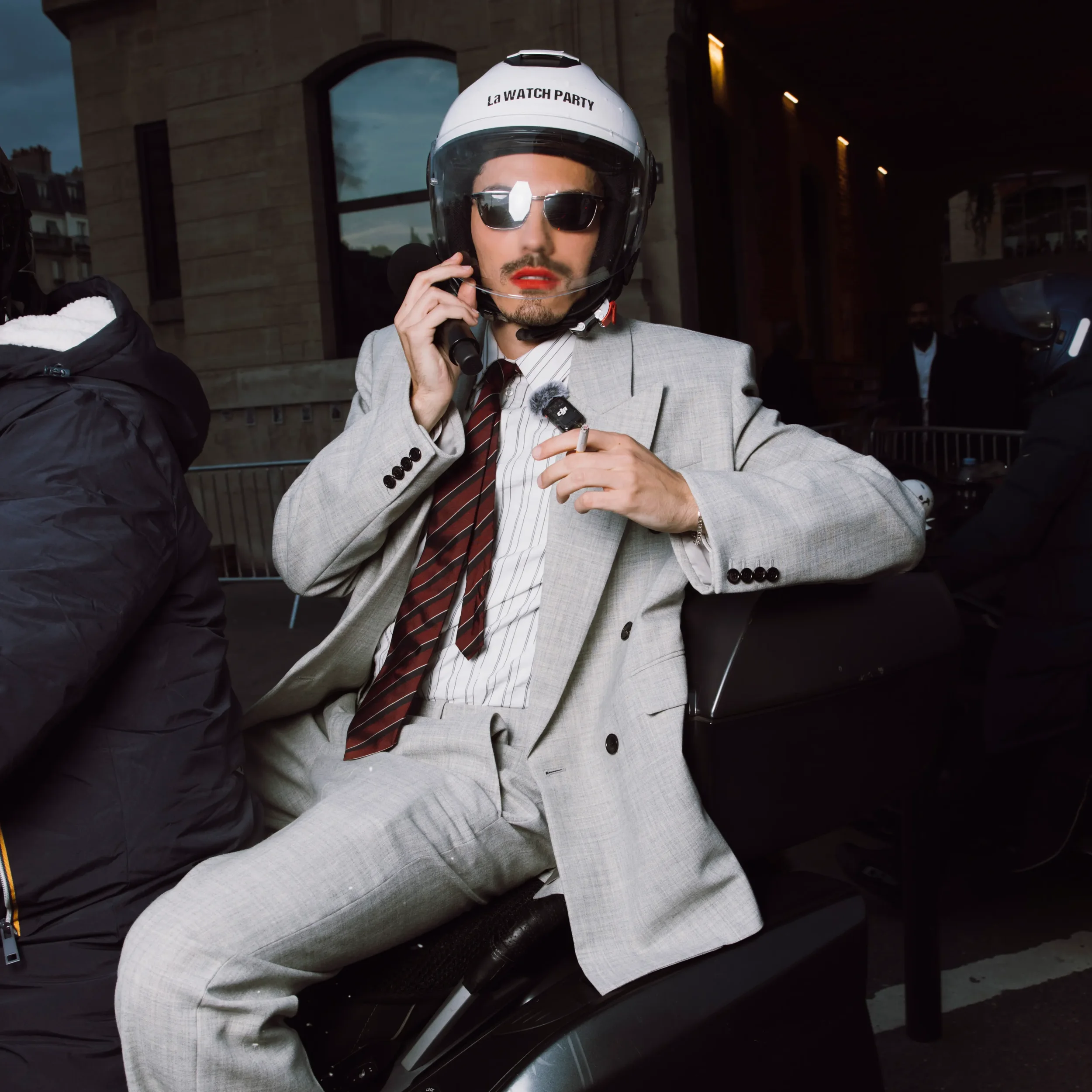
That act matters because high fashion has always depended on distance. The runway gains power from its inaccessibility; the front row derives meaning from scarcity. La Watch Party does not abolish that distance, but it exposes its fragility. It suggests that the emotional life of fashion is not contained only inside the venue. It also exists among those who understand the references, feel the stakes, and build community around the spectacle from elsewhere.
In that sense, La Watch Party is luxury without ownership in its purest form. No one leaves owning the collection. Most will never buy the clothes. But they have accessed the atmosphere, the discourse, the ritual, the feeling of being near fashion as it happens. The value lies not in possession, but in participation.
This is why our generation’s preference for access over ownership cannot be reduced to affordability, though economics are impossible to ignore. Luxury prices have climbed beyond the reach of many young consumers, while rent, tuition, debt, and unstable work have made traditional ownership feel increasingly unrealistic. But the financial explanation alone is too narrow. It assumes that ownership remains the ideal and access is merely the substitute.
To own luxury is to preserve it. To access luxury is to experience it at peak intensity. The temporary garment resists the dulling effect of permanence.
It is tied to a night, a photograph, a room.
Luxury has always sold dreams, but the dream used to terminate at possession. The boutique, the receipt, the dust bag, the object placed carefully on a shelf: these were the rituals of arrival. Now, the rituals are more dispersed. They happen in rental platforms, vintage appointments, collector networks, group chats, livestreams, watch parties, and borrowed closets. Luxury has become less about the object alone and more about the choreography around it.
The result is a new status system. Not ownership as proof of taste, but access as proof of cultural fluency. The question is not simply who has the most, but who knows what to borrow, when to wear it, how to reference it, and when to let it go.
In a culture where identity is fluid, images circulate faster than objects, and ownership is increasingly expensive, temporary fashion does not read as failure. It reads as strategy. It allows style to remain agile, social, and alert. It treats clothing not as evidence of wealth alone, but as a medium for experience.
The future of fashion may not belong to the person who owns the most. It may belong to the person who understands that access, handled well, can be its own form of power.